
She was known as the “Mayor of Columbia Gardens.” Maria Cappetto and her husband Peter were long-time residents in the South Meadow tract designated for the flower and vegetable plots the City considered “war gardens.” Like hundreds of other Hartford people who migrated from the Front Street neighborhood (aka Little Italy) the Cappettos preferred the relative independence and open space of unclaimed land below Wawarme Avenue, in contrast to the crowded poverty of the east side neighborhood along the Connecticut River.
One similarity both areas shared was spring flooding, which guaranteed each year the rising river waters from the winter thaw. At best, the yearly inundation was a nuisance; at worst, it was an expense that required building repair and clean up.
When Maria Cappetto and Columbia Garden neighbors marched to City Hall, it was usually to request basic improvements the residents needed, like clean water. After all, they were taxpayers, and polluted drinking water from their small wells or the river’s edge was not fit for human consumption.
Cappetto had “limited command of English yet she argued forcefully for the installation of sewers and other improvements,” according to one news report. Entire families joined the Cappettos to the municipal building to add their voices.

The community population, made up mostly of Italian and Polish immigrants, grew in size, spreading out over hundreds of acres of undeveloped land. There were periodic discussions among city lawmakers about the zone’s future use. Building factories that could bring in tax revenue was a popular idea.
The arrival of Standard Oil had proved to be a boon to city coffers. But the gasoline producer polluted the surrounding land and water. Standard built a large access road for its fuel storage tanks, blocking access to Columbia Garden homes.
There was no municipal improvement plan being considered for Columbia Gardens, which soon grew to about 400 residents. No government approved roads were built, so the people themselves created a patchwork thoroughfare and listed them Avenues A, B, and C. etc., and First Street to Eighth Street. Police support could not be counted on, so each home tied up growling dogs out front to keep trouble at bay. They built wood frame houses, brick structures, and shacks from material scavenged from the nearby dump. Some of the families secured row boats to their homes as protection from the floods.
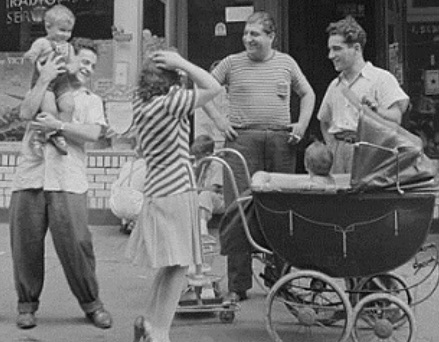
The area featured a chicken market, a grocery store (which doubled as a post office), and eventually permanent businesses like Gandalfo’s Auto Shop. The locals raised pigs, turkeys, and chickens for private use.
The appearance of this cooperative group of the working poor was troubling to the city’s rich and powerful. The Hartford Courant was particularly cruel in its critical assessment:
“As these people move freely about the city and the children attend school with other children, they carry germs of disease. They carry also habits, customs, standards of living and points of view that are equally dangerous. To allow more than 100 children to grow up under such conditions is nothing short of the neglect in the first place by the parents who could afford better homes, and in the second by authorities that permit the known situation to continue. No city can afford to shelter with and it’s boundaries a separate community that lives outside the protection of the law designed to safeguard public health.”

In 1929, Mayor James Batterson accused local backers of accessble water as nothing more than a subterfuge for unrestrained growth:
“Personally I think it’s a shame that this thing is being shoved down the city’s throat willy-nilly. None of the streets in Columbia Gardens should be exempted because even if one street is accepted an order that the city water department lays pipeline, the goose will be cooked. It’s an entering wedge for the collaboration of that territory as a development.”
Later that same year, a special city council committee led by Rocco Pallotti toured Columbia Gardens. It was probably the first time ever that any city official saw the conditions first hand. The first thing they reviewed was a resident’s tax invoice, which totaled “the same as those who get services,” said a startled committee member. Some children were wearing burlap feed sacks for clothes. The fact-finders observed that the water supply was indeed rusty and “wormy,” and the homes had no electricity or reliable heating.

The destructive 1936 Hartford flood caused a total of $420,000 in damages (over $9 million today). Some local victims were granted funding for repairs, especially those still living close to the river. But Columbia Gardeners weren’t so lucky: they were given “fair value“ and required to vacate the neighborhood.
A few years after the homes were dismantled, the city government built Charter Oak Terrace in 1940, Hartford’s first public housing project for war industry workers.
The families of Columbia Gardens faced rough living conditions, city neglect, and the insulting attitudes of the urban elite. And yet forty years later, many had fond memories of their old neighborhood. For a number of years they held neighborhood reunions. As one woman recounted:
” [It was] a big, beautiful playground, our own little village. Even visiting hoboes were fondly remembered… cooking soup over open fires. And these guys shared everything. They were nice, educated men just down on their luck like everyone during the great national depression. “
==================================
 The Shoeleather History Project