With three million homeless people nationwide in 1988, in the land of Ronald Reagan’s criminal domestic policies, and a housing vacancy rate of almost zero in Hartford, People’s Housing Action forms to sharpen public focus on this basic human right.
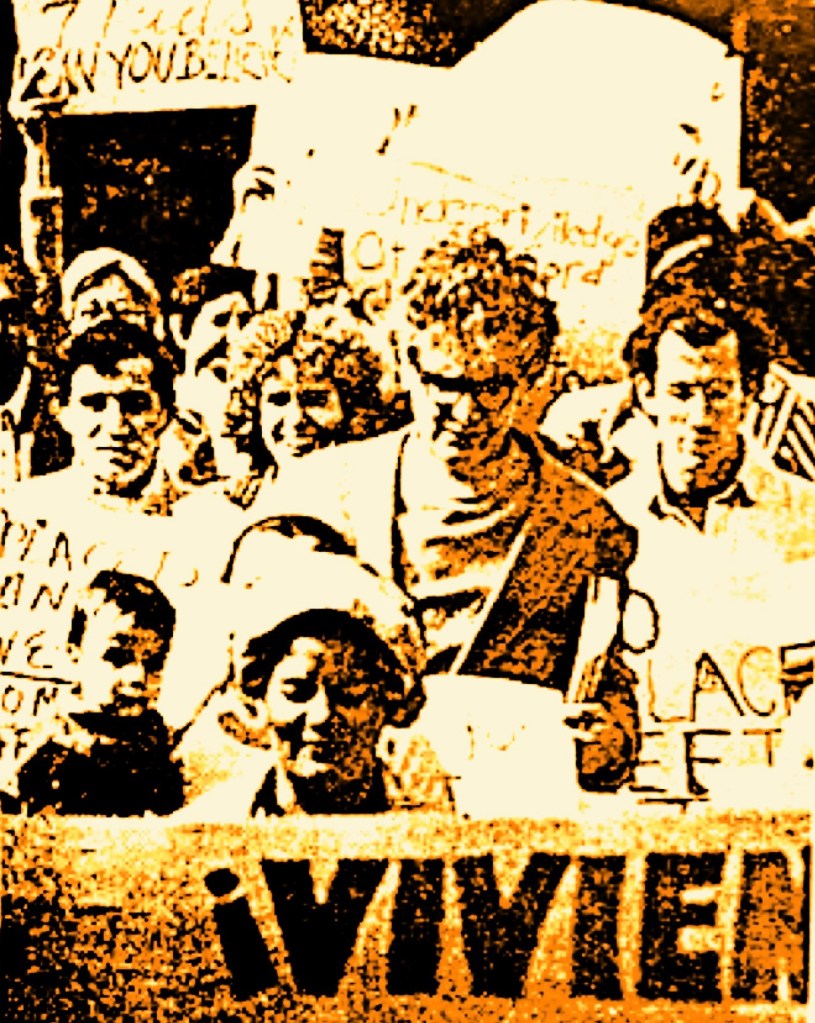
Starting with a two day, 28-mile walk from Willimantic to Hartford, protesters communicate the hard, cold facts. “Five thousand people are on the Section 8 waiting list in Harford,” says Elna Moberg of the local YWCA’s women’s shelter. “These people are the working poor, unemployed, women and children,” she tells a crowd of more than one hundred at Betances Park, the march’s destination. Section 8 is the federal housing subsidy program that eases, but does not cure, the city’s housing crisis.
A national study shows that nearly 4 million low cost housing units are urgently needed. The figure has doubled since Ronald Reagan became president.
Juan Figueroa, a state representative first elected by People For Change (PFC), the local third political party, tells the audience that three developers have bought nearly the entire housing stock on Park Street between Main and Hudson. He plans to meet the speculators to make sure they are not just building condos. “We don’t need more disbursement of families,” Figueroa says.
On the evening of July 14, 1988, People’s Housing Action helps to ratchet up the pressure. In Washington, D.C. there’s a federal affordable housing bill that will create 7.5 million new housing units working people can afford.
In 60 cities around the nation, groups are occupying unused buildings that could be affordable housing sites as a way to bring attention to the federal proposal.
The events have been inspired by Mitch Snyder and the Community for Creative Non-Violence (CCNV), which has spearheaded direct action support for the homeless in Washington. In 1984 Snyder went on a hunger strike until Reagan was forced to rehabilitate a building that could shelter 1,000 homeless people. The next year, Snyder was in Connecticut at a local college campus speaking on “Militarism and Hunger: the Connections.”
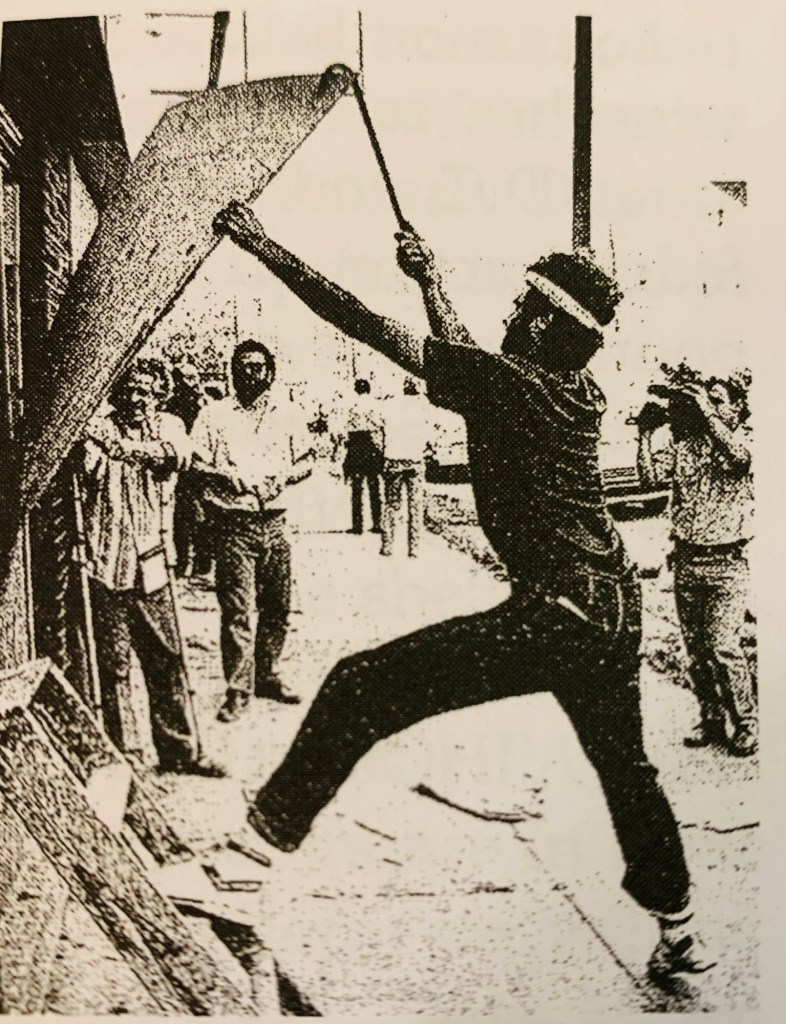
Tonight’s action is called “Take Off the Boards,” and on Hudson Street, that’s just what a dozen activists do. With crowbars and hammers they rip down the plywood that has been covering the doors and windows at 363 Hudson. The building was previously the site rented by PFC a few years back during its first successful election campaign. The third party had made affordable housing a top priority. Now, members of the group are part of the Hudson Street occupation.
One of those wielding a crowbar is Steve Sononne, a housing activist suffering from serious physical disabilities. Steve is also homeless. When asked by a reporter if he and his compatriots are planning to stay the night, Steve says yes. “I’ll do what I always do, just grab a space on the floor.”
The action has plenty of support throughout the city. Next to the protest site, a second story window opens and out pops Ramón Quiros, the veteran Puerto Rican community and civil rights activist. He is excited and happy to see what is transpiring. After a hearty pledge of support, Quiros flies the Puerto Rican flag from his window.
The People’s Housing Action squatters settle in for the night. By dawn, they are mildly surprised that neither the absentee landlord nor the police have made a move to evict them. Time for Plan B.
They walk three miles to Scarborough Street, on the posh side of town. In a stroke of very good luck, the rag tag bunch startles Congresswoman Barbara Kennelly as she is leaving her well-appointed home with a clutch of aides.
Will she support the federal affordable housing initiative in the U.S. House? Will she put her name on the bill? Yes, she replies, clearly anxious to get away from the group. As it turns out, Kennelly is en route to a press conference where she will announce her plans to return to Congress.
Four months later, on November 8th, Kennelly wins her re-election. Steve Sonnone and others are in D.C. ending a seven-week fast to spur more federal action on homelessness. He has lost forty pounds and is dangerously weakened. Is the fast worth it? Sononne replies: “We made the effort, and history will record the results.”
Today, the Casas Verde Sur affordable housing units stand where 363 Hudson once stood. Across the street is the Ramón Quiros Park.


Wow, Steve! What’s changed? I mean, here in New Britain, my rent just went up by $220 in one month, with no way to make up the difference. Housing needs to be done creatively and in a practical manner, for all who need it it!!! Best to you in 2024!!!!
The article mentions groups in 60 cities occupying vacant buildings for the homeless. I was part of one of those groups in Minneapolis MN. We organized 400 people for the March on Washington for the homeless 1989 October 08.