Nation-building at the point of a Gatling Gun
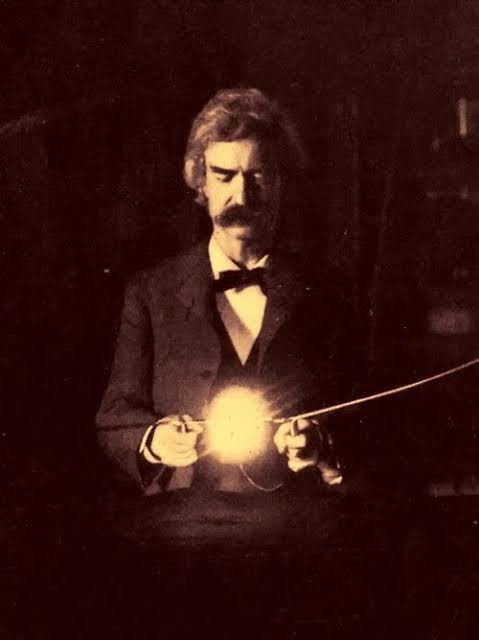
June 19th marks several significant incidents in Connecticut history. First is Juneteenth, an important locus in the African American liberty route to abolition. June 19, 1865 was proclaimed slavery’s end (two years late) to the people of Galveston Texas.
On that same date fourteen years later that Hank Morgan was attacked with a crowbar by a co-worker known as Hercules, a powerful blow that sent Hank back to the sixth century.
I am referring to the plot device used in A Connecticut Yankee in King Arthur’s Court, the 1889 Mark Twain classic. This novel is a science fiction satire, a fable that explores time travel and ridicules chivalry, monarchy, and gullible human behavior.
But Connecticut Yankee is much more, and its lessons are especially relevant today. Mark Twain predicts U.S. international military adventures of the 20th and 21st centuries. He rips open in their catastrophic genocidal results.
Hank Morgan, a foreman at lthe Colt firearms factory, finds himself transported to King Arthur’s Camelot. As a visitor from the future he is the smartest man in the world. His contributions to improve the feudal, backward England of 528 A. D. are democracy and technology. But not just any technology– After all, Hank has the experience of mass producing deadly Colt weapons.
Hank recoils from the slave-like conditions of poverty and violence inflicted on peasants by the English gentry. He witnesses the extravagant Gilded Age excess of the royalty and nobility. In response to the gulf between rich and poor, Hank seeks to create a Republic by bringing this primitive population a new political and economic system based on modern technology. Call it regime change, or call it nation building.
Progress comes with a price, however. Hank makes enemies of the Church and the nobility, all of whom have lost wealth, privilege and power as the result of his reforms. They organize a holy army to drive him out.
Exporting democracy takes a terrible toll on the country Hank and his comrades want to save. He resorts to modern warfare to protect the progress he has bestowed on the English peasants. They didn’t ask for any of these improvements, or the arsenal he has built, but they have them now.
Hank and his workmen build Gatling Guns (a weapon actually manufactured at Colt firearms) that can spit out as many as 300 bullets a minute– surely the first American weapon of mass destruction. Following the wartime principle of “destroying the village in order to save it,” Hank blows up every factory, workshop and mill his Republic has constructed to keep them out of enemy hands.
Hank’s forces don’t fight traditional face-to-face battles, but like today’s drone warfare they use remote control. As Hank says, in sardonic Twain fashion, “we shan’t have to leave our fortress, now, when we want to blow up our civilization.”
Hank’s crew creates explosive glass torpedoes and buries them under the sand for use as land mines. Miles of electric fences burn thousands of unsuspecting enemy troops to death so quickly they can’t cry out. Hank calls the results his “red terror.” This death by electrocution is meant to keep the enemy away, but it also ends up trapping Hank and his followers in their fortified cave, victims of their own technological prowess, in a war they cannot win.
Connecticut Yankee is prescient. It is a narrative that our nation has played out on the soil of many other small nations: Gaza, Iran and Iraq are just the most recent.
It’s almost like Sam Clemens built himself a time machine.
 Shoeleather History Project